Car wash or detailing: which one does your car need?
A wash is weekly maintenance. Detailing is correction and protection, once or twice a year. What each includes, what each costs and how to tell them apart.
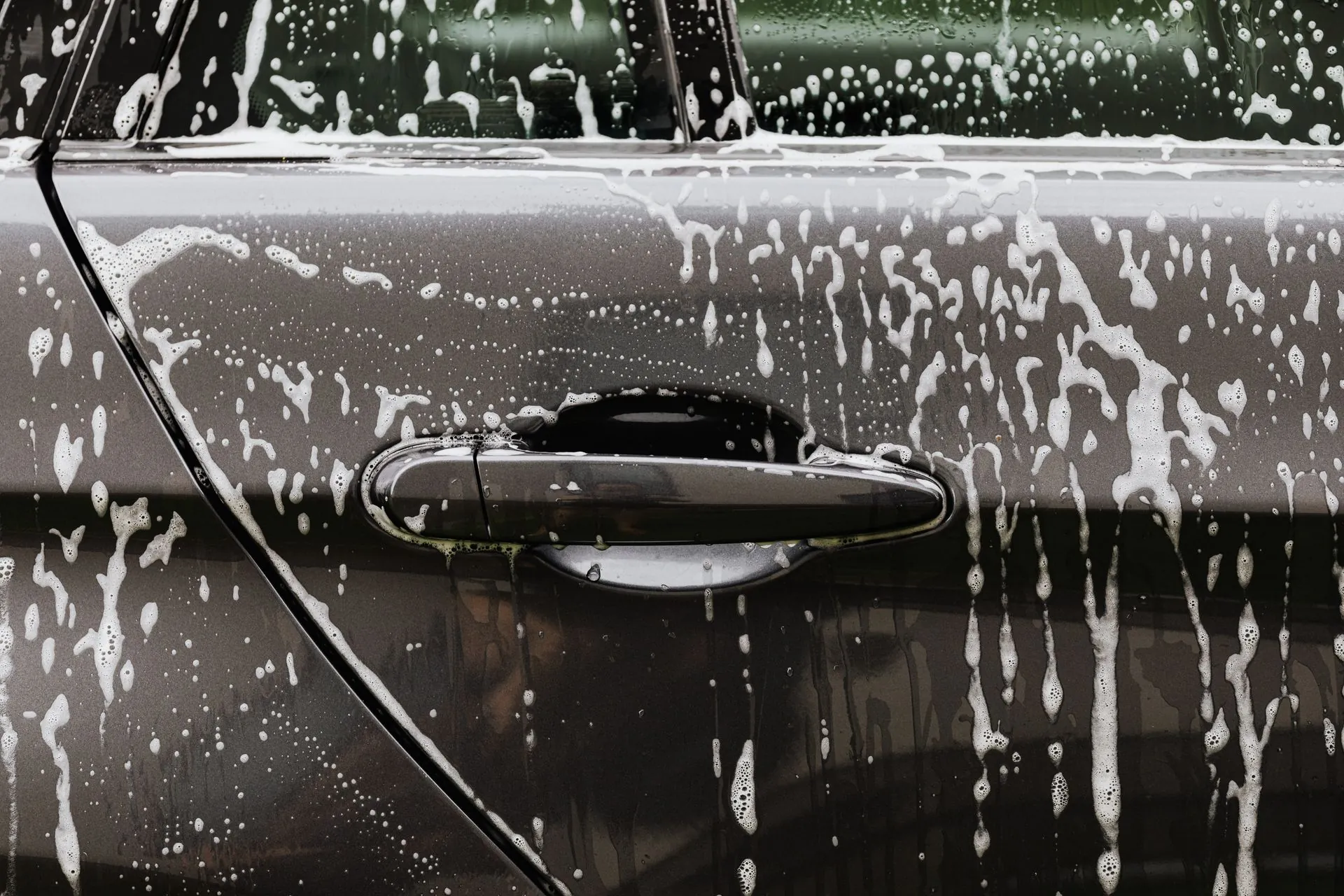
A car that is washed every week and never detailed stays clean and slowly goes flat. A car that is detailed once and then left alone looks brilliant for a month, then looks like a dirty car with good paint hiding under it. Both owners paid for something useful. Each of them bought only half the job.
The difference is not effort or price. A wash removes what is sitting on top of the paint. Detailing works on the paint itself.
A wash is maintenance
A wash takes off what has landed on the car since the last one: road dust, brake dust, pollen, bird mess, monsoon splash, the film that builds up on glass. All of it is loose or lightly stuck, and all of it comes off with water, soap and a correct method.
An exterior wash here runs in this order:
- A pre-rinse with a pressure lance at 6 to 8 litres a minute, to get the grit off before anything touches the paint.
- A foam blanket, left to sit, so whatever is left is softened and lifted.
- A two bucket contact wash, so the grit picked up off one panel does not go back onto the next one.
- Wheels and arches, which are the dirtiest part of any car and need their own tools.
- A final rinse, then blown dry so no towel is dragged across a dry panel.
That is about forty minutes of work. It is meant to be repeated, roughly weekly in a city with this much dust, and it is priced to be repeatable. Our provisional exterior wash price is Rs 399, GST inclusive.
What a wash does not do is anything to the paint itself. It will not remove swirl marks, it will not remove bonded contamination you can feel through a plastic bag, and it will not put protection on. It was never meant to.
Detailing is correction and protection
Detailing is three jobs that happen in a fixed order, because each one would undo the one before it.
- Decontamination. Tar, iron particles thrown off brake discs, tree sap and industrial fallout bond to the clear coat and survive any wash. They come off chemically and with a clay bar. Until this is done, polishing just grinds them into the paint.
- Correction. A machine polish with an abrasive compound cuts the clear coat down until it is level with the bottom of the fine scratches, which is what takes the haze out and brings the gloss back. It removes clear coat, so it is not something to repeat often.
- Protection. A wax, a sealant or a coating goes on last, over paint that is now clean and flat. It gives the water something to sheet off, which in a hard water city is the practical benefit as much as the shine.
Interior work belongs to the same session: a full vacuum, the plastics and glass done properly, and seats and mats depending on what they are made of.
This is half a day of work. It is booked ahead, because the bay is occupied for that whole time and a car cannot be fitted around a queue of washes. Our provisional full detail price is Rs 3,499, GST inclusive.
Both of those prices are provisional. The bay has not opened. The price list gets confirmed when it does, and current figures are always the ones on packages and prices.
What these things cost in India, and what GST does to the number
A basic exterior wash in an Indian city is a few hundred rupees. A full detail is a few thousand. A multi stage paint correction, or a ceramic coating with a warranty on it, runs well above that and into a different bracket altogether. Anyone quoting a full detail at wash prices has taken something out, and it is usually the correction step, which is the slow one.
Car washing and detailing are taxed at 18% GST, under SAC 998714. That matters when you compare quotes, because a price quoted without GST is 18% higher than it appears. Rs 3,499 inclusive and Rs 3,499 plus tax are not the same offer. Ask which one you have been given.
How to tell which one your car needs
Four tests, none of which need any equipment.
- The sun test. Look down a panel in direct sun or under a torch at night. A web of fine circular scratches around the reflection means correction, not cleaning. A wash will not touch it.
- The bag test. Put your hand in a thin plastic bag and run it lightly over a clean, dry panel. If it feels gritty rather than glassy, there is bonded contamination on the paint and the car needs decontaminating.
- The water test. Watch how rain or rinse water behaves. On protected paint it pulls into beads and runs off. If it lies in flat sheets and dries in place, the protection is gone.
- The dirt test. If the car is simply dirty and the paint underneath looks fine when wet, you need a wash. Nothing more.
If the car fails only the dirt test, book the wash. If it fails the sun, bag or water test, a wash will get it clean and leave every one of those problems exactly where it was.
The cycle that actually works
Wash weekly. Detail once or twice a year. The two are not alternatives, they are different intervals of the same routine, and each one protects the value of the other.
A detail done on a car that is then washed badly for six months is money spent on damage you are about to redo. A car washed carefully every week arrives at its detail needing much less correction, which means less clear coat removed, which means it can be corrected again in a few years time.
What to do now: run the four tests this weekend, in daylight, on a clean panel. Book the wash if it is only dirty. Book the detail if the paint has a problem. Both are on packages and prices, and visit covers how booking works.
Written by The Car Wash Company, a single wash and detailing bay in Jubilee Hills, Hyderabad. We have not opened yet, so these notes are method and local context rather than a record of work done. If something here is wrong, tell us at[email protected]and we will correct it.