Can you be fined for washing your car in Hyderabad?
Washing a vehicle with treated drinking water is prohibited in Hyderabad. What HMWSSB bans, the penalty in force, and what you can use instead.
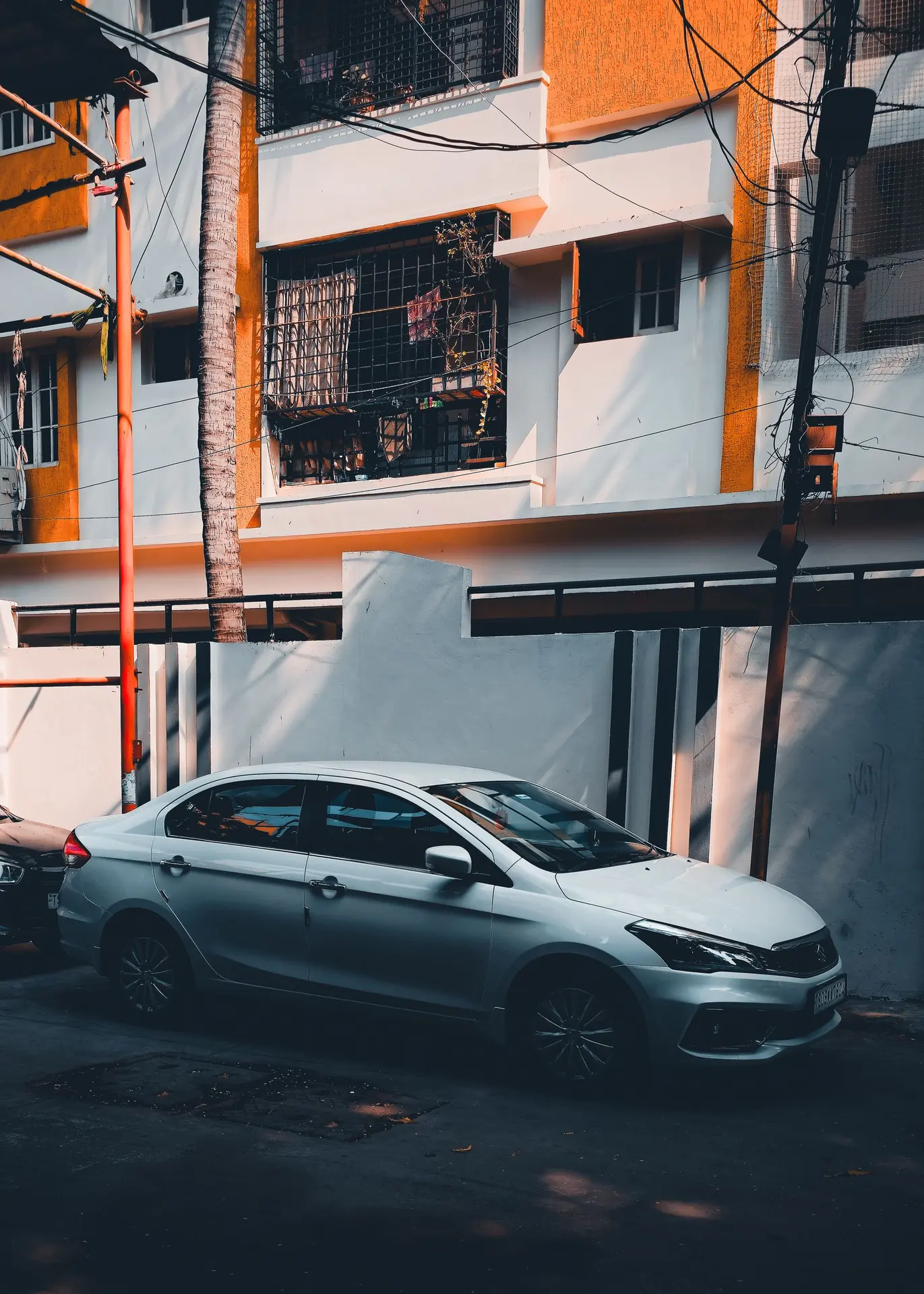
In March 2025 a resident of Journalist Colony in Jubilee Hills was fined Rs 1,000 for washing a car with drinking water. Journalist Colony is a residential lane, not an industrial yard, and the car belonged to the household. If you park in Jubilee Hills and rinse your car down on a Sunday morning, that is the case worth knowing about.
It does not mean washing your car is illegal. The rule is narrower than that. Once you can see where the line sits, staying on the right side of it is straightforward.
The rule is about the water, not the wash
The Hyderabad Metropolitan Water Supply and Sewerage Board prohibits washing vehicles with treated drinking water. That prohibition does not stand on its own. It sits in a list alongside watering lawns and gardens, filling swimming pools, and hosing down streets.
Read the list together and the logic is plain. Every item on it is a job that does not need water of drinking quality. Treated water is expensive to produce and it runs tight through a Hyderabad summer. Paint gains nothing from chlorination.
So the offence is defined by the source of the water, not by the act of cleaning a car. Cleaning your car is not the offence. Pointing the treated municipal supply at it for twenty minutes is.
What the penalty is today
The penalties in force run from Rs 20 to Rs 1,000, with a further Rs 100 for each day the use continues.
Two things follow from that.
The first is the width of the range. Rs 20 and Rs 1,000 are a long way apart, and the Journalist Colony fine landed at the top of it. Nobody should assume the bottom is the default.
The second is the daily figure, which is the part most people skip past. A one off fine is an irritation you pay and forget. Rs 100 a day, accruing while the same hose runs every morning, is a different kind of problem, and it is meant to be.
The bigger numbers are a proposal, not the law
An increase in penalties of five to ten times has been proposed. That is all it currently is: a proposal. Until it is notified and in force, the figures above are the ones that apply, and anyone quoting the larger numbers as settled law is ahead of the facts. That includes us. If it changes, this page will say so, and not before.
While we are here: larger rupee figures do circulate online attached to Hyderabad water offences. Before you repeat one, check which offence it belongs to. Penalties aimed at premises and at motor pumps drawing on the mains are a separate matter from washing a car, and the two get mixed up constantly.
What you can use instead
The prohibition names treated drinking water, which leaves you with real options.
- Borewell water. This is not the treated municipal supply, so it is not the water the rule names, and many buildings around Jubilee Hills already run their non drinking use off one. The catch is that borewell water here is usually hard. It leaves mineral deposits on paint as it dries, which is what the white rings after a home wash actually are. Dry the car before the water dries on it.
- Recycled or reused water. Water that has already done a job once, collected and put back to work. Where a building does this, it is the cleanest answer available to a resident.
- A bucket rather than a hose. Be clear about what this fixes. A bucket does not change where the water came from: fill it at a treated tap and it is still treated water. What it changes is volume. An open hose moves 15 to 20 litres a minute and keeps moving it while it lies on the ground, whereas two twenty litre buckets are forty litres and not a drop more, however long you take.
What a resident should actually do
If you wash at home, in this order:
- Find out what your building runs on. Ask your association whether the line in the parking area is municipal or borewell. Most residents genuinely do not know, and it is the single question that decides whether this rule touches you at all.
- Stop leaving a hose running. Visible, continuous wastage is what gets noticed from a gate, and it is where almost all of the litres go.
- Pre-rinse, then use two buckets. One bucket of soap, one of plain water to rinse the mitt, so the grit that came off the bonnet does not go straight back on to the door. That is a paint decision as much as a water one.
- Dry the panel before the panel dries itself. Hard water spots form as water evaporates. Get there first with a clean towel while the surface is still wet, or with blown air.
If you would rather not deal with any of it, that is what a fixed bay is for. Ours is in Jubilee Hills and it has not opened yet. The method, when it does, is a pre-rinse, a foam blanket, a two bucket contact wash and blown drying. How we think about water is set out on the water page, and the provisional prices are on packages and prices.
One last thing, plainly stated. We have no connection to HMWSSB. We are not endorsed, certified or approved by the board, and nothing here is legal advice. It is the published rule, the penalty actually in force, and one local case that shows how the two meet in a residential lane.
Written by The Car Wash Company, a single wash and detailing bay in Jubilee Hills, Hyderabad. We have not opened yet, so these notes are method and local context rather than a record of work done. If something here is wrong, tell us at[email protected]and we will correct it.