Hard water spots on your car in Hyderabad
Borewell water here carries dissolved calcium and magnesium. What it leaves on your paint, and the difference between a spot, an etch and a stain.
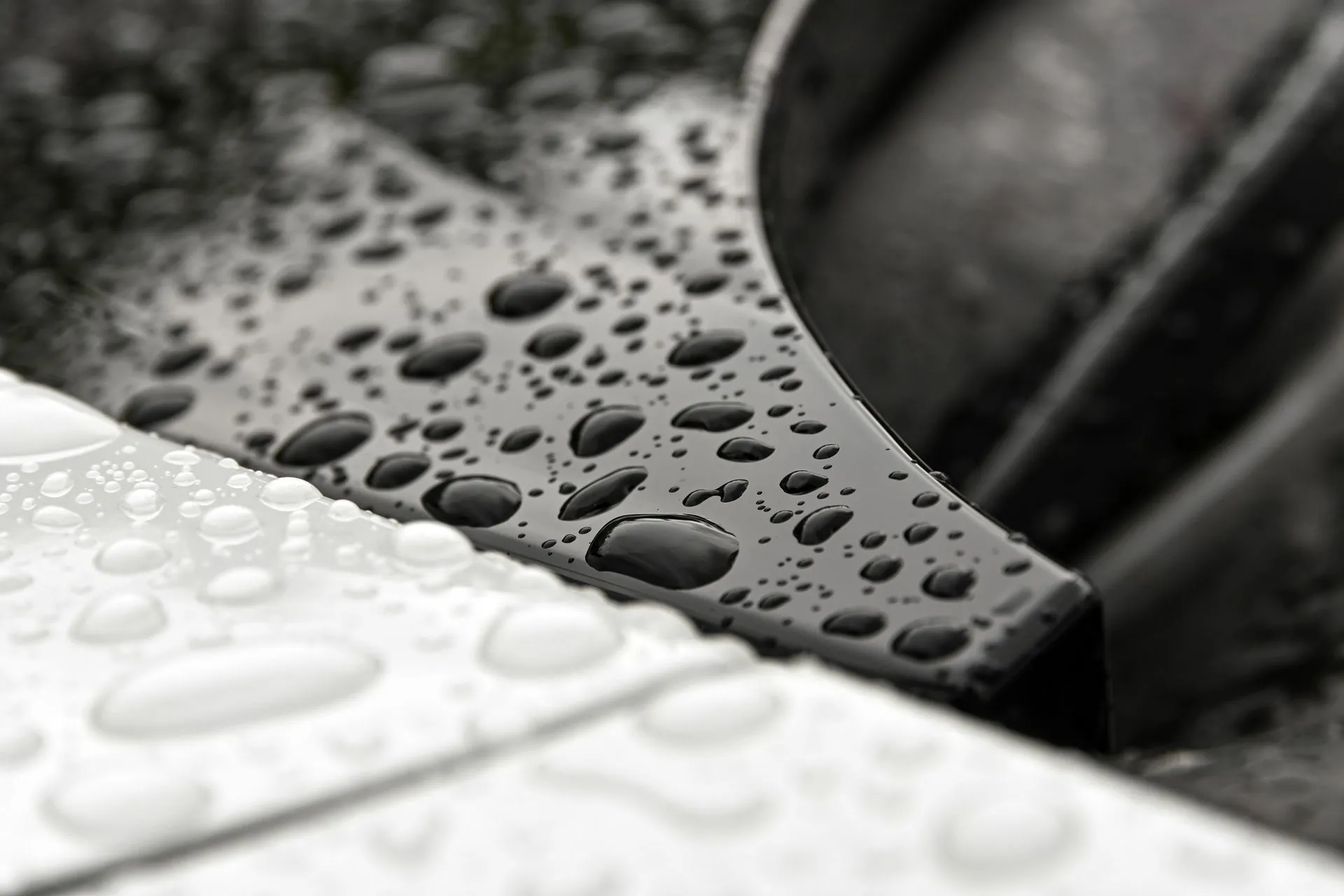
Wash a car outdoors in Hyderabad at two in the afternoon and the first panel will be dry before you have finished the last one. Come back to it and the paint is covered in white rings. The car is clean. It looks worse than it did when you started.
The water leaves, the mineral stays
Much of Hyderabad is supplied from borewells, and groundwater here is hard. Hard does not mean dirty. It means the water is carrying dissolved calcium and magnesium picked up from the rock it moved through. It comes out of the pipe looking exactly like soft water.
The water is not what marks the paint, because the water goes. Every droplet that dries on a panel evaporates and leaves its mineral load behind, in the outline of the drop. A white ring is the footprint of a droplet that dried where it sat. A flat white haze across a bonnet is thousands of those rings overlapping.
This is why rinsing harder does not help: a second wash with the same water just adds more mineral. The only way to win is to stop the water drying on the car.
The supply rules push you towards the harder water
HMWSSB, the Hyderabad Metropolitan Water Supply and Sewerage Board, prohibits washing vehicles with treated drinking water, alongside watering lawns, filling pools and hosing down streets. Penalties in force today run from Rs 20 to Rs 1,000, plus Rs 100 for every day the use continues. In March 2025 a resident of Journalist Colony, in Jubilee Hills, was fined Rs 1,000 for washing a car with drinking water.
So the water most cars in this city get washed with is bore or tanker water, the hard end of what is available. The rule and the spotting problem point at the same answer: use less water, and never let what you do use dry on the panel. The rules themselves are set out on water.
Three problems, one name
People call all of this “water spots”. It is three conditions with three different fixes, and the difference is how far the mineral has got into the paint.
1. A water spot sits on top
The deposit is a crust of mineral resting on the clear coat. Nothing has been damaged. You can often feel it as a faint roughness under clean fingers on a dry panel, and it looks white or grey rather than dull.
This is the one that washes off. A proper wash removes most of them, and what is left comes off with a dedicated water spot remover, which is mildly acidic and dissolves the mineral rather than abrading it. Test it on a low panel first and rinse it off completely.
2. An etch has bitten in
Leave the same deposit in hot sun and it stops being a passenger. As the last of the water goes the mineral concentrates, the panel is hot, and the deposit works into the top of the clear coat. What you are left with is not a crust on the surface: it is a shallow crater in the shape of the old droplet, with a visible rim.
The test is simple. Wash and dry the panel properly. If the ring is still there and the surface feels smooth, the deposit has gone and what you are looking at is the damage it left.
An etch cannot be dissolved, because there is nothing left to dissolve. It comes out by machine polishing, which cuts the clear coat down to the floor of the crater. That works, and it spends clear coat you do not get back.
3. A stain is in paint that was already worn
On an older car, or one that has been polished many times, or single stage paint with no clear coat at all, the surface is porous enough for mineral to work into it rather than sit on it. The mark is usually duller and more diffuse than an etch, with no clean rim, and it does not move at all when the panel is cleaned.
Staining is the one with no reliable fix. If there is clear coat left, a polish may lift it. If there is not, nothing short of paint will. Worth knowing before anyone sells you a correction on a fifteen year old bonnet.
Why washing in the sun makes all three worse
Heat is the variable that turns a spot into an etch.
- A hot panel evaporates a droplet in a minute or two, so the car dries itself before anyone can dry it properly.
- As the drop shrinks, the mineral in it concentrates into a smaller and smaller area.
- A droplet sitting on paint behaves a little like a lens, focusing sunlight into the spot directly under it.
- Soap dries too, and dried soap holds mineral against the paint instead of letting it rinse away.
Wash in the early morning, in the evening, or under cover. In Hyderabad from roughly March to May this is not a refinement, it is the whole job.
Drying matters more than washing
Almost all of the damage happens in the ten minutes after the final rinse, not during the wash.
That is why the drying step deserves more attention than the soap. Work panel by panel rather than washing the whole car and then starting to dry. Blowing the water off is better than a towel, because nothing touches the paint and because air gets into the places that quietly drip an hour later: mirror housings, badges, shut lines, the boot seal and around the number plate. Those late drips are why a car that was dried carefully still shows streaks in the evening.
Protection helps as well, not because wax or sealant stops mineral, but because water sheets off a protected panel instead of standing on it in beads. Fewer droplets left behind means fewer rings.
What to do
- Assume the water at home is hard unless you know otherwise.
- Never wash a car in direct sun, and never let a panel dry itself.
- Dry immediately, panel by panel, and clear the shut lines and mirrors where water hides.
- Deal with fresh spotting the same week. A spot is a wash. An etch is a machine polish.
- Keep protection on the paint so water leaves the panel rather than sitting on it.
Our wash finishes blown dry for that reason. What it includes is on packages and prices, and booking is on visit.
Written by The Car Wash Company, a single wash and detailing bay in Jubilee Hills, Hyderabad. We have not opened yet, so these notes are method and local context rather than a record of work done. If something here is wrong, tell us at[email protected]and we will correct it.