Monsoon car care in Hyderabad: rain is not a wash
Rain does not clean a car, it leaves dust behind as it dries. What the monsoon in Hyderabad does to paint, glass, arches and interiors.
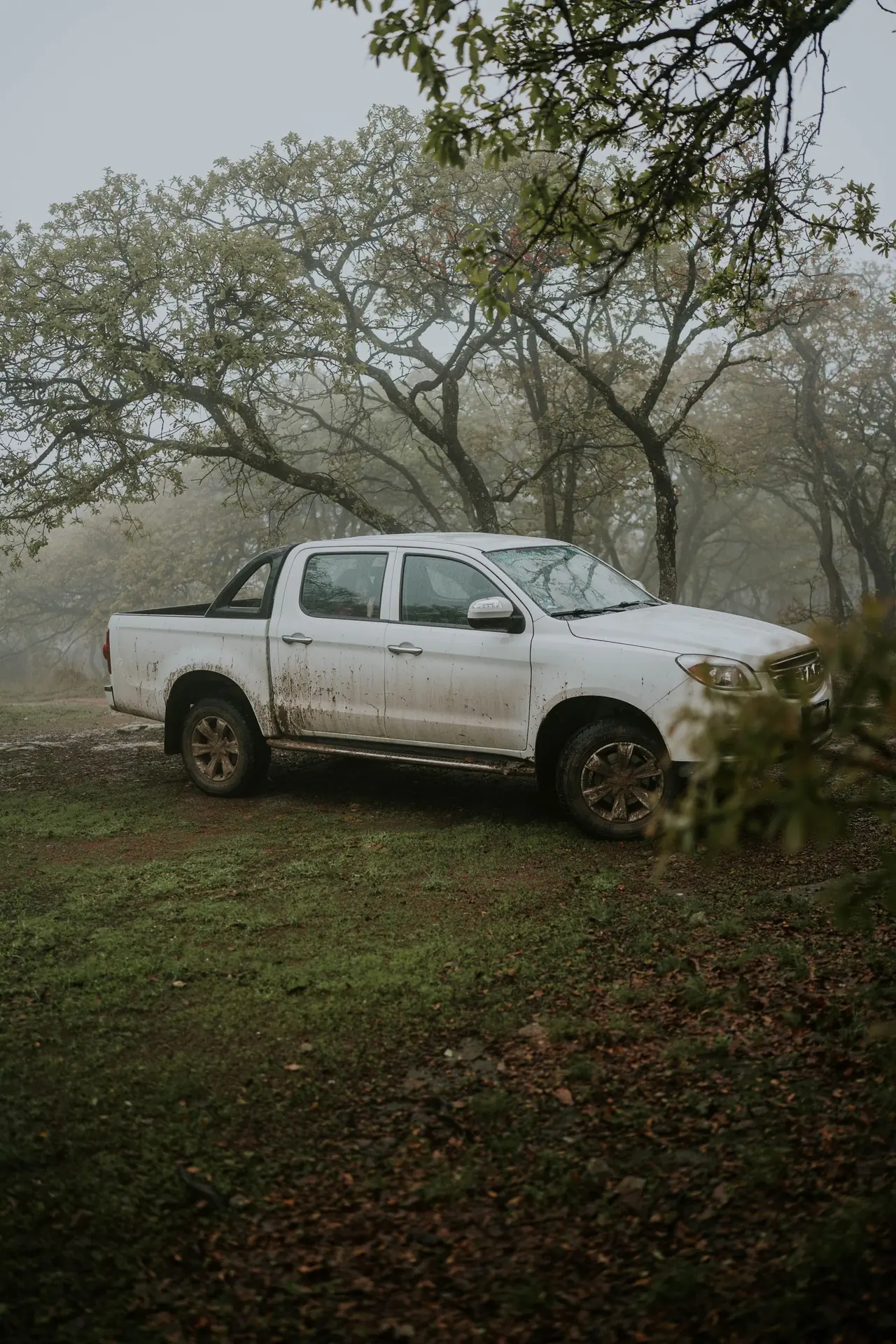
Park a clean car outside in Jubilee Hills, let it catch one good shower overnight, and look at it in the morning. The bonnet is covered in dried rings, the sills are flecked brown, the rear screen is hazed grey. Nothing touched that car except water, and it is dirtier than it was.
That is not bad luck. It is what rain does.
Rain is a delivery system for dust
A raindrop has to form around something. It condenses on a speck of airborne dust, then collects more on the way down through a few kilometres of air. By the time it reaches your bonnet it is dilute mud. Then it evaporates. The water goes, the solids do not, and what you see the next morning is everything that drop gathered, left in a ring the size of the drop.
Hyderabad adds its own loading. The air here carries construction dust alongside traffic soot: stone dust, cement, the fine reddish grit off cut ground and unmade verges. Our monsoon arrives in bursts rather than steady drizzle, so there are hot, dusty gaps between the downpours, and the first heavy rain after one of those gaps is the dirtiest of the season. That is when the air has the most in it to bring down.
So the rule is the opposite of the instinct. The monsoon is when a car needs washing more often, not less.
What the season actually does, part by part
Paint, because the dirt sits on it for days
In the dry months you notice a dirty car and deal with it. In the monsoon you look at the sky, decide it is pointless, and leave it, so the dirt stays on the clear coat for a fortnight instead of a day.
The longer a deposit sits, the harder you have to work to lift it later, and hard work on paint means contact, and contact is what scratches. Bird droppings and tree sap are the worst of it: in damp air they spread and soften into the surface rather than flaking off. Under a tree, where most of us park here, that is a daily problem.
The arches, the sills and the underside
This is the part nobody cleans and the part the monsoon punishes hardest. Kerbside water does not drain quickly on most of our roads, so you drive through standing water on any wet evening. The wheels throw silt, grit and oily residue up into the arches, along the sills and behind the bumpers. Those places are enclosed and shaded, so they stay wet for days after the paintwork has dried. Damp grit held against a seam does not blow off on the drive to work.
After a wet week, look at three places:
- The inner lip of each wheel arch.
- The sill under the doors, the strip your trouser leg brushes.
- Behind the front bumper, where spray collects and stays.
The pre-rinse is the step that counts here, and it has to reach underneath.
The interior, and the smell that follows
Wet shoes go in, the mats soak, and the water goes through to the carpet and the foam padding beneath. The car is then shut up in humid air, often in a basement park with no sun on it. That is how the musty smell starts, and by the time you can smell it the problem is in the padding, not the mat.
Three habits help, and none cost anything:
- Take the mats out and dry them outside the car. A wet mat left in place dries into the carpet.
- Run the air conditioning on fresh air for the last few minutes of a drive. Recirculating cabin air in the monsoon means recirculating the moisture you carried in.
- If the car is parked under cover, leave the windows open a finger’s width.
Glass, and the face of it that actually matters
Look at the inside of your windscreen with low sun coming through it. There is a thin film there, off the dashboard and off the cabin air. In dry weather it is invisible and harmless.
In the monsoon it is the whole problem. Condensation forms readily on that film, so a dirty inside face mists sooner, mists more heavily and clears more slowly than a clean one. Run the blower as hard as you like: you are fighting a surface that wants to fog.
The inside of the windscreen is the face almost nobody cleans, and it is the one that decides whether you can see. Do it with two passes of clean microfibre, one damp and one dry, on a Sunday.
Wiper blades
Grit gets caught along the rubber edge, and a blade holding a trapped particle scores a fine arc into the glass that does not polish out. Lift each blade and wipe the edge with a damp cloth every few days. It takes a minute. Rubber that spent the summer baking in a Hyderabad car park is hardened before the monsoon asks it to work, so a blade that chatters or leaves a band across your eyeline is perished, not dirty. Replace it.
The one thing not to do
Never wipe a dusty or rain streaked panel with a dry cloth. Most monsoon paint damage comes from exactly that, and it is self inflicted: the cloth kept in the boot drags every particle of grit across the clear coat in a straight line. Those scratches build up and show as a haze in direct sun.
The safe order is short:
- Rinse first, so loose grit floats off before anything touches the paint.
- Wash with two buckets, one for soap and one to rinse the mitt.
- Dry with blown air, or a clean towel on a surface still wet, never by dragging a towel over dry paint.
What to do this week
- Wash after the car has been rained on and dried, not on a fixed date.
- Check the arches, sills and bumper backs after any drive through standing water.
- Get wet mats out of the car the same day.
- Clean the inside of the windscreen first, then the outside.
- Wipe the wiper edges.
If the car has sat under dried rain for a fortnight, that is what a proper wash is for. Ours is Rs 399 for the exterior, GST included, and provisional, because the bay has not opened. The rate card is on packages and prices, and you can book a wash.
Written by The Car Wash Company, a single wash and detailing bay in Jubilee Hills, Hyderabad. We have not opened yet, so these notes are method and local context rather than a record of work done. If something here is wrong, tell us at[email protected]and we will correct it.